Where to Put Your Renovation Dollars (and Where Fancy Fixtures Are a Waste)
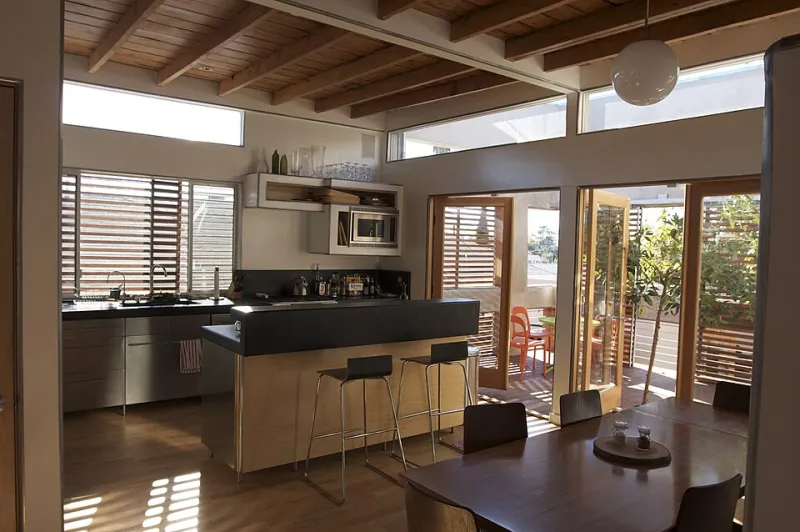
Photo: Jeremy Levine from Los Angeles, United States, CC BY 2.0, via Wikimedia Commons
Every renovation budget is a series of arguments with yourself. And after enough years of building, we've noticed the same pattern: homeowners tend to overspend in the rooms where nobody can tell the difference, and underspend in the rooms that carry the house.
So here's our field guide, based on real projects, real invoices, and what actually holds up—both in daily life and at resale.
Splurge-Worthy Rooms
1. The Kitchen (No Surprise, But Spend Wisely)
The kitchen is the workhorse and the resale anchor. Realistic US budget for a serious mid-to-high renovation: $40,000–$90,000.
Where the money earns its keep:
- Countertops and cabinetry. Stock boxes with veneer ends start around $8,000–$15,000 installed; semi-custom runs $20,000–$40,000. The jump buys you drawer boxes that survive a decade of slamming and doors that stay aligned.
- Appliances: mid-tier (Bosch, KitchenAid, GE Profile) at $6,000–$12,000 does everything the luxury brands do. The $20,000 range buys status, not dinner.
2. The Primary Bath
Second-biggest resale driver, and the room where cheap materials fail fastest. Water plus steam plus daily abuse is a durability test. Budget $25,000–$50,000.
- Spend on: the shower system (proper waterproofing, a quality valve—$8,000–$15,000 done right), ventilation, and floor tile.
- Save on: vanity mirrors, lighting fixtures, and hardware. Nobody at a showing checks the faucet brand. Everyone checks for a cracked shower pan.
3. The Mudroom / Entry
The sleeper pick. This is the room that quietly determines whether your house stays clean, and it's the most-asked-for addition we get from families with kids or dogs.
- Built-in lockers and bench: $3,000–$10,000
- Durable flooring (porcelain or luxury vinyl plank): $2,000–$5,000
It won't wow anyone on a listing photo, but it changes your Tuesday mornings for fifteen years.
4. Windows and Exterior Doors
Technically not a room, but it's where we beg clients not to cheap out. Replacement windows run $600–$1,200 each installed for quality units. Budget windows fail at the seals in 10–15 years; good ones outlast your mortgage. Same story with the front door—a $2,500–$5,000 fiberglass or steel door pays you back in energy bills and curb appeal every single day.
5. The Basement Finish (If You're Doing It)
Finished square footage is the cheapest per-foot value in the house. A $35,000–$60,000 basement build adds livable space at half the cost of an addition—but only if you spend on moisture management and insulation first, finishes second.
Where You're Just Buying the Logo
1. The Guest Bathroom
A $12,000 guest bath and a $30,000 guest bath are, to every guest and most buyers, the same bathroom. Mid-range fixtures, a clean tile job, good lighting—$8,000–$15,000—and you're done.
2. The Laundry Room
We love a pretty laundry room as much as anyone, but the $4,000 artisan tile and the custom cabinetry hood don't outperform the $1,500 version with a decent counter over the machines. Spend on the washer and dryer, save on everything around them.
3. The Formal Dining Room
In much of the US, the formal dining room is becoming the room where furniture goes to be stored. Chandeliers and wainscoting here are resale-neutral at best. Keep it simple and put the difference into the kitchen.
The One-Line Rule
Spend where water, wear, and structure live—showers, cabinets, windows, floors. Save where the upgrade is purely visible and easily swapped later—fixtures, mirrors, lighting, hardware.
Get that order right, and your budget will feel twice as large as it did on paper.