Seven Questions That Separate Real Custom Builders from Sales-First Outfits

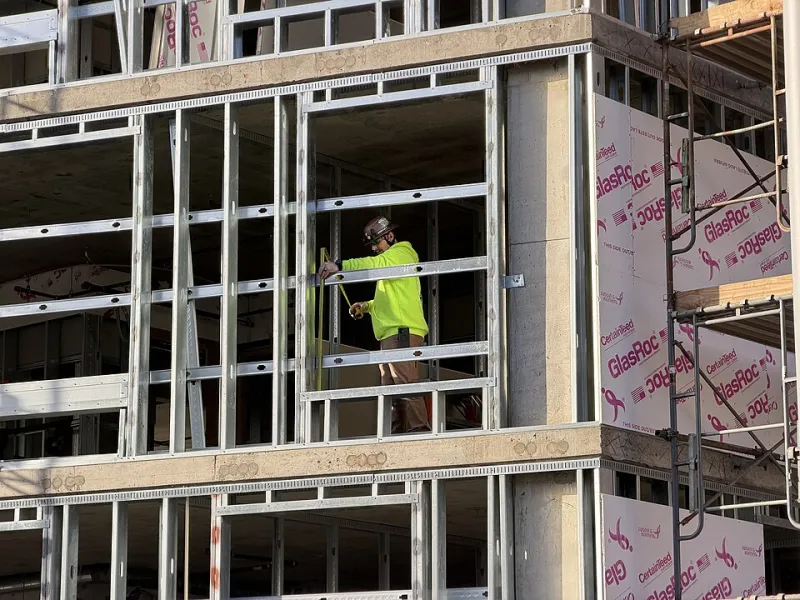
Photo: Government of California, Public domain, via Wikimedia Commons
Anyone can look great in a showroom. The polished website, the drone footage, the friendly project manager who returns your calls before you've signed—that's the easy part of this business. What matters is what happens months in, when the framing inspection fails or the tile you picked gets discontinued.
Before you put your signature (and your savings) on the line, ask these seven questions. More important than the questions themselves: learn to hear the difference between a real answer and a rehearsed one.
1. "What exactly does your warranty cover, and for how long?"
A great answer is specific: one year on workmanship, two on systems, ten on structural—in writing, with a clear punch-list process at the 11-month mark. A red flag sounds like "we stand behind everything," or a warranty that lives in a verbal handshake. If it's not in the contract, it doesn't exist.
2. "How long have you worked with your subs, and are they licensed and insured?"
A builder is only as good as the crew holding the nail gun. A great answer names trades they've used for years—"our electrician's been with us a decade; his guys know our standards." A red flag is vagueness, or worse, subs who change job to job based on whoever's cheapest that week. Consistency is where craftsmanship comes from.
3. "Walk me through an allowance in your budget. What happens when I go over?"
Allowances—set dollar amounts for things like lighting, tile, and plumbing fixtures—are where shady budgets hide. A great answer shows realistic numbers based on what you've actually told them you like, plus a transparent process for overages. A red flag is suspiciously low allowances designed to make the bid look cheap. That $8,000 lighting allowance will evaporate the moment you pick out anything you actually want.
4. "How do you handle change orders?"
Every build has changes. What separates pros from headaches is the paperwork. A great answer: every change gets priced before the work happens, in writing, with your signature—no surprises on the final invoice. A red flag is "oh, we just work it out at the end." That's how $30,000 disputes are born.
5. "Who will actually be on my job site every day?"
The person selling you the build is often not the person running it. A great answer introduces you to the project manager or site supervisor by name, explains how often you'll get updates, and how decisions get communicated. A red flag is a rotating cast or a salesperson who can't describe the field team at all.
6. "Can I talk to three recent clients—including one whose build hit problems?"
Any builder can hand you their happiest client. A great answer comes from a builder who offers references from a job where something went sideways—because how a crew responds to a failed inspection or a delayed shipment tells you far more than a flawless project ever will. If they dodge this question, ask yourself why.
7. "What's your payment schedule, and how is it tied to completed work?"
A great answer ties draws to milestones—foundation poured, framing done, drywall hung—verified by inspections, with a meaningful retainage held until final walkthrough. A red flag is a large deposit up front and monthly payments that outpace the actual work on site. Your money should trail the progress, never lead it.
The Question Behind the Questions
Notice the pattern: every one of these probes for process, not personality. Charm is easy to fake; a written change-order policy is not. A builder who welcomes these questions—who pulls out the warranty document, who offers the troubled project as a reference—is showing you exactly how they'll behave when your build gets hard. And it will get hard. That's construction.
We'd rather answer tough questions on day one than defend surprises on day 300. If the builder you're interviewing feels the same way, you've probably found your crew.