Stand in the House Before You Sign the Paper

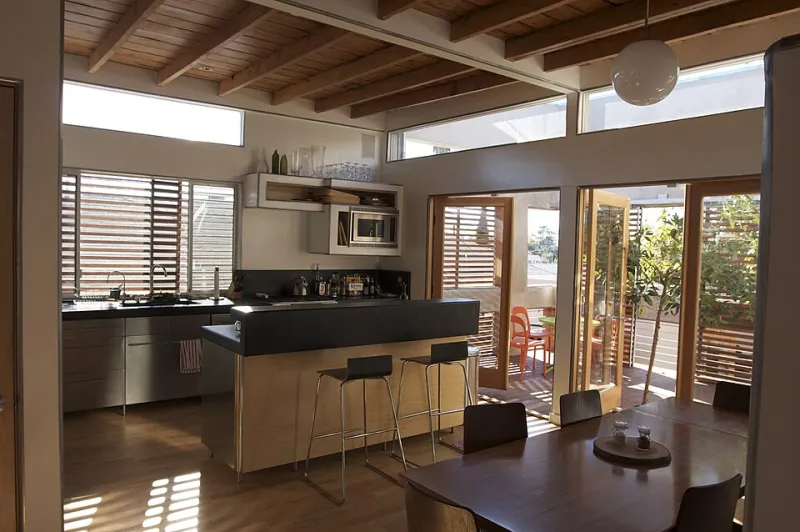
Photo: homebuilder walking homeowner through finished custom house interior, via hannbuilt.com
Here's a rule we hold to at CMan Builds, even when it costs us a sale: nobody signs a contract with us until they've stood inside a home we've actually finished. Not a render. Not a model unit. A real house, built for a real family, ideally one that's been lived in for a year or more.
Some builders will tell you that's unnecessary. We'd argue it's the single most important hour you'll spend in the entire process of hiring one.
Why Photos Lie and Drywall Doesn't
Every builder's website looks fantastic. Wide-angle shots, golden-hour exteriors, staging furniture that hides a hundred small compromises. Photography is a marketing department's job, and it's good at its job.
But a finished home—the one the client actually lives in—can't be photoshopped. Time is the ultimate inspector. A tile transition that was rushed will show a hairline crack by month eight. A door hung in a hurry will stick every humid July. Trim that was caulked instead of properly fitted will telegraph its seams as the house settles.
When you tour a home that's two or three years old, you're not seeing the builder's best day. You're seeing their average day, repeated across every trade they manage. That's what you're actually buying.
What to Look For While You're Walking
Most homeowners don't know where to point their eyes, so here's the short list we hand people on our own tours:
Corners and trim. Look at where baseboards meet. Tight miters? Consistent reveal lines? Or do you see gaps filled with a thumb-smear of caulk? Trim is the tell of whether the finish carpenter was rushed.
Tile transitions. Where tile meets hardwood, or where a shower meets the bathroom floor—these seams are where cheap work hides. A good transition is deliberate. A bad one is a metal strip slapped over a problem.
The mechanical room. This is our favorite one. If the furnace, water heater, and electrical panel look like a tornado hit a supply closet, that tells you exactly how the builder treats the parts of your home nobody sees. If it's organized, labeled, and serviceable, that discipline shows up everywhere else too.
Doors and drawers, operated. Open things. Close them. A soft-close hinge installed correctly and one installed cheaply feel completely different in your hand.
Ask the homeowner one question: "What would you change?" A builder who arranges the tour without the homeowner present is telling you something. A homeowner who answers honestly and still recommends their builder is telling you something better.
Why We Insist On It
The tours do two things for us, and both matter.
First, they set expectations. When a client walks a finished home and sees what a properly done mudroom or stair skirt actually looks like, our conversations about budget and scope get honest fast. Nobody's surprised at month six. The house on the tour becomes our shared reference point.
Second, it filters both ways. If a prospective client tours one of our homes and decides our level of finish isn't what they're after—that's a good outcome. A mismatched client is a bad project for everyone, and we'd both rather find out in an hour than in month nine of a build.
The Uncomfortable Version of This Advice
If a builder won't arrange a walkthrough of a completed project—or can't produce a single past client willing to let you stand in their home—that's not a scheduling issue. That's your answer.
You're about to spend more money on this than on almost anything else in your life. Spend one afternoon standing inside the evidence first. We'll have the coffee on.