Five Minutes in Your House Tells a Builder More Than You'd Think
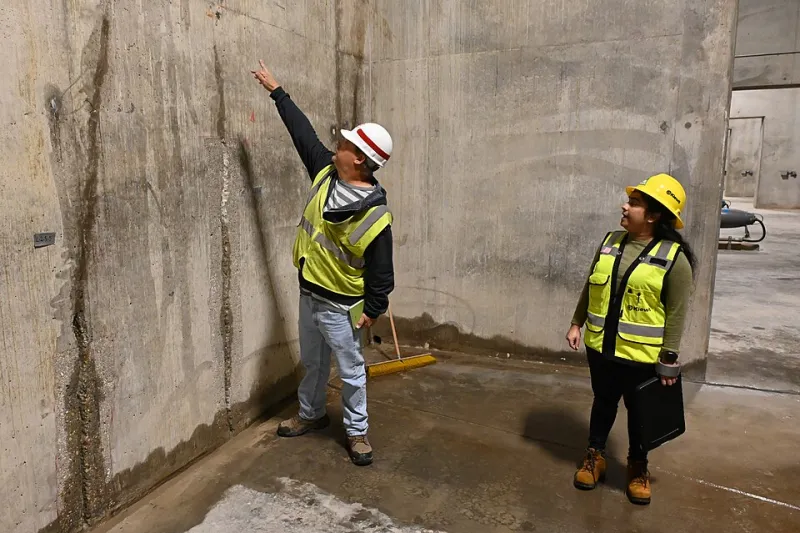
Photo: Team New Orleans, US Army Corps of Engineers, Public domain, via Wikimedia Commons
Every contractor has a routine. When we walk into a home for the first time—whether it's a 1920s craftsman or a 1990s colonial—we're not looking at your kitchen backsplash. We're reading the house. And honestly, the first five minutes tell us most of what we need to know.
Homeowners are usually surprised by this. They expect the conversation to start with their Pinterest board. It doesn't. It starts at the curb, and it starts with water.
The Driveway Walk: Reading Water Before We're Inside
Water is the number one enemy of any house, and it leaves clues everywhere. As we walk up, we're checking the grading. Does the ground slope toward the foundation? Are the gutters clogged or dumping right next to the house? Is there staining on the lower siding?
If the yard slopes inward and the downspouts terminate in a puddle zone, we already know there's a decent chance of moisture issues in the basement or crawlspace. That changes everything about a renovation that touches those areas.
Your checklist: Walk your property after a hard rain. Look for standing water within ten feet of the foundation, gutter overflow, and soil erosion near the house.
The Foundation Tell-All
Inside the basement or crawlspace, we're scanning the concrete. Not every crack matters—but some do.
- Hairline vertical cracks: Usually shrinkage. Not a crisis.
- Horizontal cracks or bowing walls: This is a structural conversation, often from soil pressure. Budget impact: real.
- Stair-step cracks in block foundations: Movement over time. Worth an engineer's eyes.
- Efflorescence (that white, chalky residue): Water is moving through the masonry. It may be cosmetic, but it tells us the basement isn't dry.
If we see bowing or horizontal cracking, a finished basement renovation just got more expensive—possibly a lot more. That's exactly the kind of thing you want discovered before the contract, not after demo day.
The Electrical Panel Confession
Here's a fun one: we open your panel, and your house tells us its history. A tangle of mismatched breakers, double-tapped lugs, and Romex zip-tied to old knob-and-tube? That's a story of weekend projects past.
We're looking for three big things:
- Panel capacity. A kitchen remodel with an induction range, a second wall oven, and an island with outlets may need more amperage than a 100-amp panel can give. Upgrading service can add $2,000–$4,000 to a project.
- Aluminum branch wiring. Common in homes built roughly 1965–1973. It's a fire risk and an insurance headache.
- Evidence of DIY splicing. If someone wired the garage from an extension cord through a window, we're going to find more surprises later.
Floors, Doors, and the Plumb Test
We carry a small level for a reason. Set it on a floor, check a doorframe, look down a hallway sightline. Out-of-level floors and racked doorframes can indicate settling—and they also tell us how much prep work goes into tile, cabinetry, and trim.
A quarter-inch out of level across a kitchen? Manageable. Two inches? We're talking floor leveling compound, shimming, or framing work before a single cabinet goes in.
Your checklist: Roll a marble across your floors. If it takes a hard turn toward one wall, note it. Check that interior doors close and latch without a fight.
How This Becomes Your Price
Here's the part homeowners don't always understand: contractors use these observations to build a number. A house with a dry basement, modern electrical, and level floors is a predictable job, and predictable jobs get tighter bids. A house with hidden moisture, undersized service, and framing surprises gets contingency padding—because the contractor knows the unknowns will cost someone money, and they'd rather it not be them.
So when you're collecting bids, a contractor who spent twenty minutes in your basement and asked about your gutters is not wasting your time. They're pricing your actual house, not a hypothetical one.
Run the checklist yourself first. Then, when you bring in builders, you'll ask better questions—and you'll spot the contractor who's actually paying attention.