Live in the Problem First: The One-Week Experiment That Makes Your Remodel Worth Every Dollar
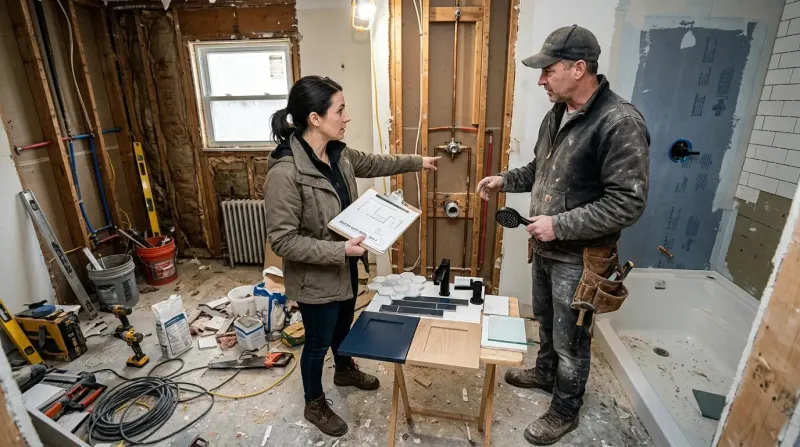
Photo: homeowner taking notes in outdated bathroom before renovation, via cdn.shopify.com
Every remodeler has heard the same opening pitch. The client shows up with a folder of saved photos, a Pinterest board forty pins deep, and a clear vision: white oak, matte black fixtures, a rain head the size of a dinner plate.
We love enthusiasm. But when someone hires CMan Builds, we usually start the conversation somewhere unexpected: the bathroom or kitchen they're trying to escape. We ask them to spend a week in it — really in it — before we design the replacement.
We call it the wet test. It's saved more projects from expensive regret than any design software ever will.
Pinterest Shows You a Photo. Your Habits Show You a Floor Plan.
Here's the uncomfortable truth about inspiration photos: they're staged for someone else's life. That gorgeous freestanding tub? It belongs to a household where nobody showers before 7 a.m. and the water heater is industrial. The open shelving kitchen? Someone else does the dishes.
Habits, on the other hand, don't lie. Where does the towel actually land when it's wet? (Not on the hook. Never on the hook.) Does the hot water make it to the far bathroom before the first person leaves for work, or does the last one in get a cold surprise? Is the hallway to the kids' rooms dark enough at 5:45 a.m. that somebody stubs a toe every week?
These details never make it onto a mood board. They're also exactly what determines whether you'll love the remodel six months in or quietly resent it every morning.
The Weeklong Audit: What to Watch For
Pick a normal week — not vacation week, not the week the in-laws visit — and run your current space like a field test. Keep a note on your phone. Here's what we ask clients to track:
In the bathroom:
- How long until hot water arrives, and how many people shower back-to-back?
- Where do towels, toiletries, and the hair dryer actually pile up?
- Is there enough counter space for two people getting ready at once, or does someone lose the mirror every morning?
- Where's the bottleneck — the toilet, the sink, the shower?
In the kitchen:
- What's the first drawer you open every day, and is it a disaster?
- Where does the mail, the backpack, and the keys land? (That's your real landing zone, whether or not it's on the plans.)
- How many steps from stove to sink to fridge? Cook one full meal and count.
- What small appliance lives on the counter because putting it away is a chore?
In the in-between spaces:
- Which lights do you turn on first in the morning, and which rooms are genuinely gloomy at the hours you use them?
- Where do you dodge each other in tight hallways or doorways?
What the Data Buys You
After a week, patterns jump out. One couple we worked with discovered their "dream" double-vanity was less important than the fact that both of them brushed teeth at the same minute every morning — so we designed a wider clear zone between sinks instead of a fancier mirror. Another client realized her towel habit wasn't going to change no matter how many hooks we installed, so we spec'd a heated towel bar exactly where she'd drop it anyway.
The list also kills wish-list items honestly. If nobody in your house takes baths, that beautiful tub is a dust-collector eating sixty square feet. If you've ordered takeout four nights this week, maybe the six-burner range conversation deserves a second look — and the budget should go to storage or lighting instead.
That's the real payoff: the wet test moves dollars from things that photograph well to things you'll touch every day.
Bring the Notes to the Design Table
When you sit down with a builder or designer, don't lead with the photo folder. Lead with the log. A good contractor will light up — because you've just handed them the design brief that actually matters. We can reconcile your habits with your style; we can't reconcile a Pinterest board with the way your family fights over one outlet at 6 a.m.
The best houses we build aren't the ones with the most impressive material selections. They're the ones where the design fits the people like a well-worn glove — because somebody bothered to measure the glove first.
So before you commit to a remodel, spend a week living in the problem. Take notes. Be honest. Then bring us the truth, and we'll build something around it that lasts.