The Dumpster Is Coming: What Your Build Says to the Whole Block
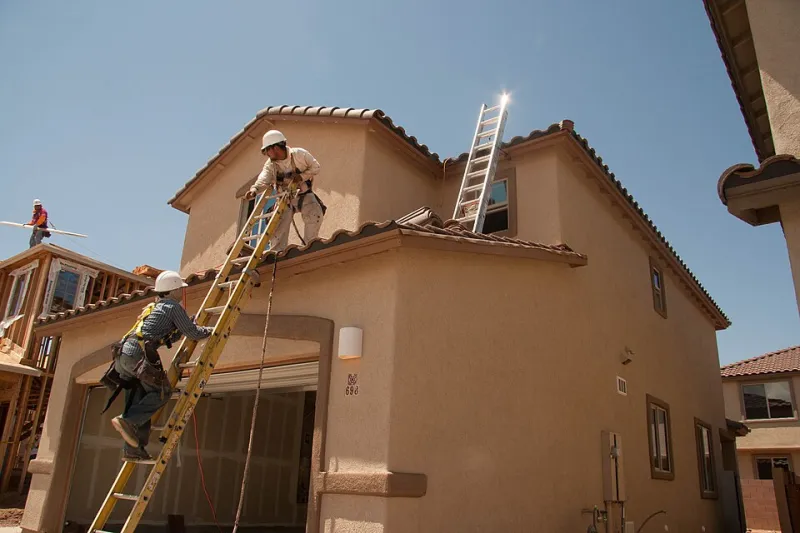
Photo: National Institute for Occupational Safety and Health (NIOSH) from USA, Public domain, via Wikimedia Commons
There's a moment in every custom build or major renovation when the project stops belonging to you. It happens the morning the dumpster arrives, the porta-john gets staked into the side yard, and the crew trucks start lining your curb like it's a job site on a highway overpass. From that day forward, you're not just building a house. You're performing a construction project in front of an audience that didn't buy a ticket.
Most homeowners never think about this until a neighbor knocks on the door with a complaint—or worse, doesn't knock and just calls the township. But here's the thing: how a build looks from the street is one of the clearest signals of whether your contractor runs a tight ship or a sloppy one. And in a country where a quarter of homeowners live under an HOA and nearly everyone else lives close enough to hear your nail gun, that signal matters.
The Curb Is the First Inspection
People judge a job site the way they judge a restaurant kitchen: by what's visible from the door. A builder who stacks lumber neatly, keeps the driveway swept, and gets debris hauled on a regular schedule is telling everyone—including you—that they run an organized operation. A site buried in trash, cigarette butts, and half-crushed copper scraps says the opposite.
At CMan Builds, we treat the curb line like a storefront window. It's not vanity. It's a proxy for everything you can't see: whether the framing is plumb, whether the rough-ins got inspected, whether someone's actually supervising the trades. Neighbors figure this out intuitively. So do appraisers, future buyers, and the inspector who shows up on a Tuesday afternoon.
The Fence Line Is Where Friendships Are Tested
Construction is a disruption, and the people closest to the disruption have the least say in it. Your neighbor didn't choose the 7 a.m. beeping of a skid steer backing up. They didn't opt into a silt fence across the shared property line or a delivery truck blocking their mailbox.
The fix is old-fashioned: communication, before the first shovel hits the dirt. A good builder will actually walk the project with the affected neighbors—show them the plans, explain the timeline, give them a phone number to call if something goes sideways. It takes twenty minutes and it prevents months of resentment.
A few things worth handling proactively:
- Property lines. If staging or storage crosses the line, get permission in writing. A handshake won't hold up when a fence panel gets dented.
- Trees and roots. Root damage from equipment is one of the most common neighbor disputes in residential construction. Flag the critical root zones before the excavator rolls in.
- Noise and hours. Most townships have quiet ordinances anyway. Respect them, and tell the neighbors you will.
- The mess factor. Daily sweep, weekly haul. Mud tracked onto the street gets cleaned the same day, not next spring.
The HOA Meeting You Didn't Know You Were Attending
If you're in an HOA, your build gets reviewed twice: once on paper, and once in reality. The second review happens at the pool, in the group chat, and at the quarterly meeting, where someone will absolutely bring up the porta-john placement or the fact that your dumpster sat out an extra week.
The playbook here is simple. Get architectural approval in writing before you break ground, and make sure your builder actually follows the approved plans. Deviations—moving a window, changing an exterior material mid-build—might seem minor to you, but they're catnip to a board looking for a violation. Your builder should know the association's rules as well as the building code. If they've never worked in your HOA before, ask them how they plan to handle the approval process. Vague answers are a red flag.
The 'Worst House on the Street' Math Works Both Ways
There's a classic real estate adage: buy the worst house on the best street. The logic is that your renovation value gets pulled up by the neighborhood around it. But when you're the one renovating, the equation runs in reverse too—your project is being measured against every house around it.
That's actually good news if you do it right. A thoughtful addition that respects the street's rhythm, an exterior that fits the neighborhood's character, a landscape that gets restored better than it was found—these don't just avoid complaints. They raise the perceived value of your whole block, which raises your own appraised value with it. We've seen finished projects become the reference point neighbors use when they hire their own contractors. That's the best kind of marketing, and it only happens when the build was run with respect for the people watching it.
What This Means When You Choose a Builder
Here's the practical takeaway: ask any contractor you're considering how they handle site management and neighbor relations. Not as a courtesy question—as a quality question. A builder who has a real answer about daily cleanup, delivery scheduling, dust control, and talking to the neighbors is a builder who sweats details. A builder who shrugs and says "we keep it tidy" is telling you they haven't thought about it, and the details they haven't thought about probably aren't limited to the dumpster.
Your house will be judged on the day you finish. But your project will be judged every single day between groundbreaking and move-in—by the people mowing their lawns next door, walking their dogs past your curb, and quietly deciding what kind of neighbor you turned out to be. Build like they're watching. Because they are.