Good Clients Get Better Houses: What Your Builder Notices (But Won't Say Out Loud)
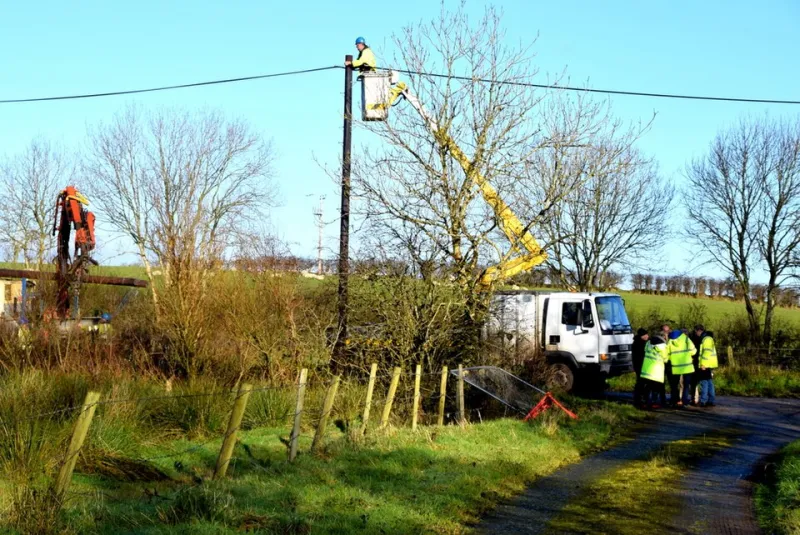
Photo: Kenneth Allen , CC BY-SA 2.0, via Wikimedia Commons
Let me tell you a secret that contractors swap over beers but almost never say to a client's face: while you're judging our work, we're judging you.
Not in a petty way. In a very practical, dollars-and-cents way. A build or renovation is a months-long partnership, and just like any partnership, how one side behaves changes how the other side operates. Homeowners who understand this end up with faster timelines, tighter budgets, and crews who genuinely care about the details. Homeowners who don't... well, let's just say the punch list grows in both directions.
Here's what's actually happening behind our clipboards.
The Money Conversation We're Having Without You
When a payment runs late, we don't stop loving the project—but the workflow changes. Subcontractors schedule jobs in order of who pays reliably. If your drywall guy has a choice between a client who pays on the dot and one who's two weeks overdue, guess whose house gets priority next Tuesday.
That doesn't mean you lose quality. It means you lose position in line, and position in line is time. Every week your project sits idle while another job moves ahead is a week of rent, a month of temporary living, another season in that half-finished kitchen.
Same goes for design changes. We expect some. Nobody picks out tile once and never wavers. But when selections keep shifting after they're ordered, or a wall moves after the electrical is roughed in, those change orders stack up. We document them, we price them, and quietly, we start padding our schedules to expect them. A client who makes decisions on time gets a schedule built on trust. A client who doesn't gets a schedule built on armor. Guess which one costs less.
Your Job Site, Your House, Our Workplace
Here's a reframe that helps: during construction, your house is our workplace. You wouldn't wander into an operating room and start moving equipment around, but construction sites get treated like public parks all the time.
The greatest hits, from a builder's perspective:
-
The wandering relative. Dad wants to inspect the framing. Cousin Rick has opinions about the joists. Every unsupervised visitor on scaffolding is a liability we're responsible for, and every well-meaning comment gets relayed to us as a "concern."
-
The friend-inspector. Your neighbor did a bathroom once and now wants to review our waterproofing. Sometimes they're right! But when they're wrong, we spend a day and a half explaining building science to someone who isn't paying for the house—and you spend that trust we'd built.
-
The surprise visit. Come by anytime, truly. But when we know you're coming, the site's picked up, questions get answered in person, and small issues get resolved on the spot instead of in a text thread.
-
The direct-to-subcontractor request. Asking the electrician to "just add one outlet while he's here" sounds harmless. It's not his contract, it's not in the plan, and now your builder is untangling a change nobody priced. Route everything through us. That's not gatekeeping—that's how the whole thing stays coherent.
What Good Clients Do (Steal This Checklist)
After enough projects, you can predict which jobs will run smooth by the end of week two. It's never the biggest budget. It's the client habits. Here's the list we wish we could hand out at signing:
1. Pay on schedule, every schedule. Deposits and draw payments are the heartbeat of the job. Set reminders. Automate if you can.
2. Make decisions by the deadline, not the deadline plus three weeks. We'll give you a selection calendar. Treat it like a flight you can't miss.
3. Batch your changes. Keep a running list, review it at your weekly check-in, and change things once—deliberately—not five times in a drip.
4. Walk the site on a schedule, with the builder. One standing weekly walkthrough beats fourteen drive-by anxiety visits.
5. Send questions in one message, not seven. A single organized email gets a complete answer. Seven texts get fragments.
6. Let us manage our own crew. If something looks wrong, ask us. Don't instruct the plumber.
7. Give us a heads-up before bringing anyone by. Including your mother. Especially your mother.
Why This Is Genuinely in Your Interest
This isn't about builders being sensitive. It's about incentives. When a project runs well, the crew wants to be there, the subs bid your next phase competitively, and the guy doing your trim work—the one whose eye for detail shows in every miter—cares in a way you can't buy.
When a project runs rough, we still build it right. Good builders don't cut corners as revenge; that's not how professionals work. But the discretionary effort—the extra dry-fit, the perfectly matched grain on that stair rail, the small fix nobody charged you for—flows toward the clients who make the work enjoyable.
Construction is one of the last industries where the product is literally handmade in front of you. The relationship you build with the people building your house shows up in the house. Be the client you'd want to work for, and the punch list stays short on both sides.